
The Newest CGMs for Type 1 Diabetes: Upcoming Glucose Sensors, Features & Age Guide (2026 Update)
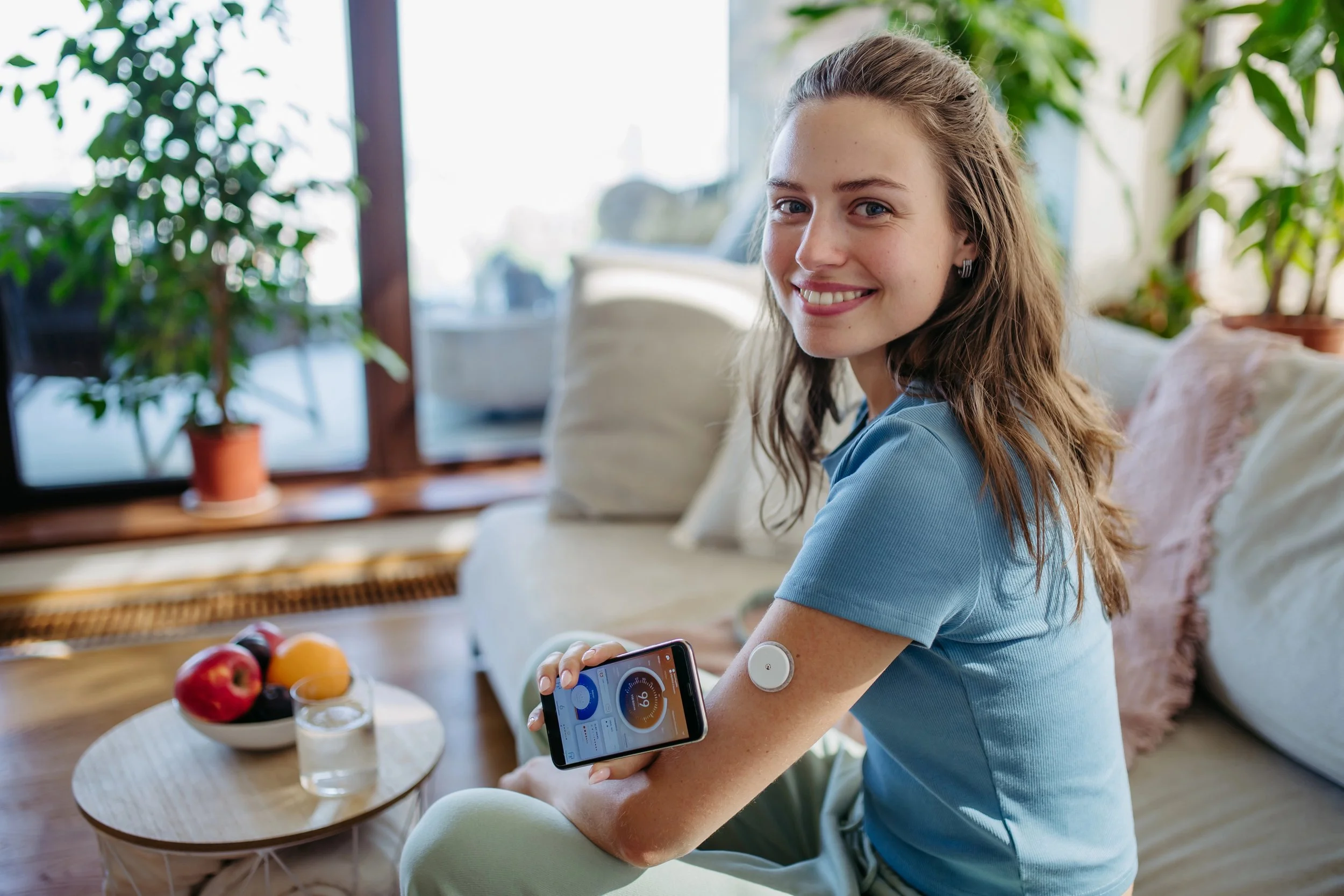
Continuous glucose monitoring (CGM) has transformed life with Type 1 Diabetes and the next generation of sensors promises longer wear, greater accuracy, multi-analyte tracking, and more seamless integration with automated insulin delivery (AID) systems. From year long implantables to needle free sensors, here’s what’s coming next.
1. Eversense 365- The First 365 Day Implantable CGM
The Eversense 365 is the world’s first one year implantable CGM, approved by the FDA in 2024 and now expanding into Europe. It requires only one insertion per year, eliminating the frequent sensor changes typical of 10-14 day wear CGM. Suitable for those age 18 or older.
Key features include:
365 day wear time
High accuracy with minimal false alerts
Removable transmitter with vibration alerts
No risk of knocking off the sensor
2. Libre Duo- Abbott’s Dual Glucose/ Ketone Sensor
Abbott is developing a dual-analyte sensor, Libre Duo, that measures glucose and ketones simultaneously, a potentially game changing tool for people with Type 1 Diabetes who face the risk of diabetic ketoacidosis (DKA).
Key features include:
Built on the Libre 3 Plus form factor
Designed for integration with multiple AID systems
Expected market arrival as early as next year
3. Medtronic Simplera CGM- Smaller, Integrated, and Expanding
The Medtronic Simplera is part of Medtronic’s next generation smart system, including:
Integration with the upcoming MiniMed 8 series pump
Planned compatibility with Abbott Libre sensors
A push toward more flexible AID options
4. Dexcom G7 and the Next Generation (G8 & Beyond)
The Dexcom G7 remains one of the most widely used CGMs, with:
A 60% smaller footprint than the G6
A 27 minute warm up
Improved accuracy
Dexcom is also working on:
Expanded AID integrations
Direct to watch connectivity
5. Abbott FreeStyle Libre 3 & Libre Rio
Abbott’s Libre line continues to evolve:
Libre 3: real time minute-by-minute glucose updates
Libre Rio: OTC CGM for adults with Type 2 Diabetes
Improved app and EHR integration
6. Biolinq Shine- The First Needle Free CGM
The Biolinq Shine is the first FDA cleared needle free glucose biosensor.
What makes it different?
No insertion needle
No filament under the skin
Uses a microsensor array
Tracks glucose plus activity and sleep data
7. Eversense E3- Six Month Implantable CGM
The Eversense E3 offers:
180 day wear
Twice yearly insertion
High accuracy
1-2 calibrations per day
8. Additional Emerging Technologies to Watch
These devices are not all CGMs, but they shape the future of diabetic systems for Type 1 Diabetes:
Modular Medical’s MODD1 patch pump
Tandem Mobi pump
Omnipod 5 expansions
What These New Sensors Mean for Your Family
Managing Type 1 Diabetes as a parent is a constant balance: keeping your child safe, helping them feel confident and independent, and trying not to spend every waking moment thinking about glucose numbers. The good news is that the next generation of CGMs is being designed with exactly these pressures in mind.
Longer Lasting Sensors = Fewer Insertions, Less Stress
New implantable sensors like the Eversense 365 last a full year, meaning:
No more changing sensors every 10-14 days
No more worrying about sensors falling off during sports, festivals, travelling or everyday life
Glucose and Ketones in One Sensor
Abbott’s upcoming dual sensor checks glucose and ketones at the same time, offering:
Faster warning signs during illness
Earlier detection of pump issues
Less guesswork when your child “just doesn’t seem right”
Smaller, Quieter, More Discreet Sensors
Newer CGMs- Dexcom G7, Libre 3, Simplera- are:
Smaller
Faster to warm up
Better at filtering false alarms
Easier to hide under clothes
Better Integration with Pumps and AID Systems
Most upcoming sensors are being designed to work with more pumps and AID systems, meaning:
More choice
More flexibility
More time in range with less manual correction
Needle Free Options Are Coming
The Biolinq Shine uses tiny micro sensors instead of a needle, a promising option for:
Children with sensory sensitivities
Kids who fear insertions
Families who struggle with site rotation
Where to Learn More
Readers can explore more through:
Senseonics updates on Eversense 365 and E3
Abbott’s dual glucose ketone sensor announcements
Medtronic Simplera and MiniMed ecosystem updates
Dexcom G7 and G8 development news
Biolinq Shine FDA clearance
Final Thoughts
The next wave of CGM technology is moving toward devices that are smaller, smarter, longer lasting, and far more intuitive. Whether it’s year long implantables, needle free sensors, or dual glucose ketone monitoring, the direction is clear: less burden, more safety, and more freedom for people living with Type 1 Diabetes, and for the families who support them. As these innovations continue to roll out, they offer something truly meaningful: the chance to spend less time managing diabetes and more time simply living life.
