
Something I Wish Had Been Explained to Me Sooner
When my child was diagnosed with Type 1 diabetes (T1D), I was told something that most families hear very early on:
"The pancreas no longer produces insulin."
It's a simple explanation, and in many ways it's true. People with Type 1 diabetes need insulin because their bodies can no longer produce enough of it themselves. But over time, I realised there was a question nobody had really answered:
How much of the pancreas actually stops working?
As a parent of a child with Type 1 diabetes, I wanted to understand more. What I discovered was that the answer is more nuanced than I expected, and it's something I wish had been explained sooner. Not because it changes treatment, but because it helps us better understand what Type 1 diabetes really is.
The Pancreas Does More Than Make Insulin
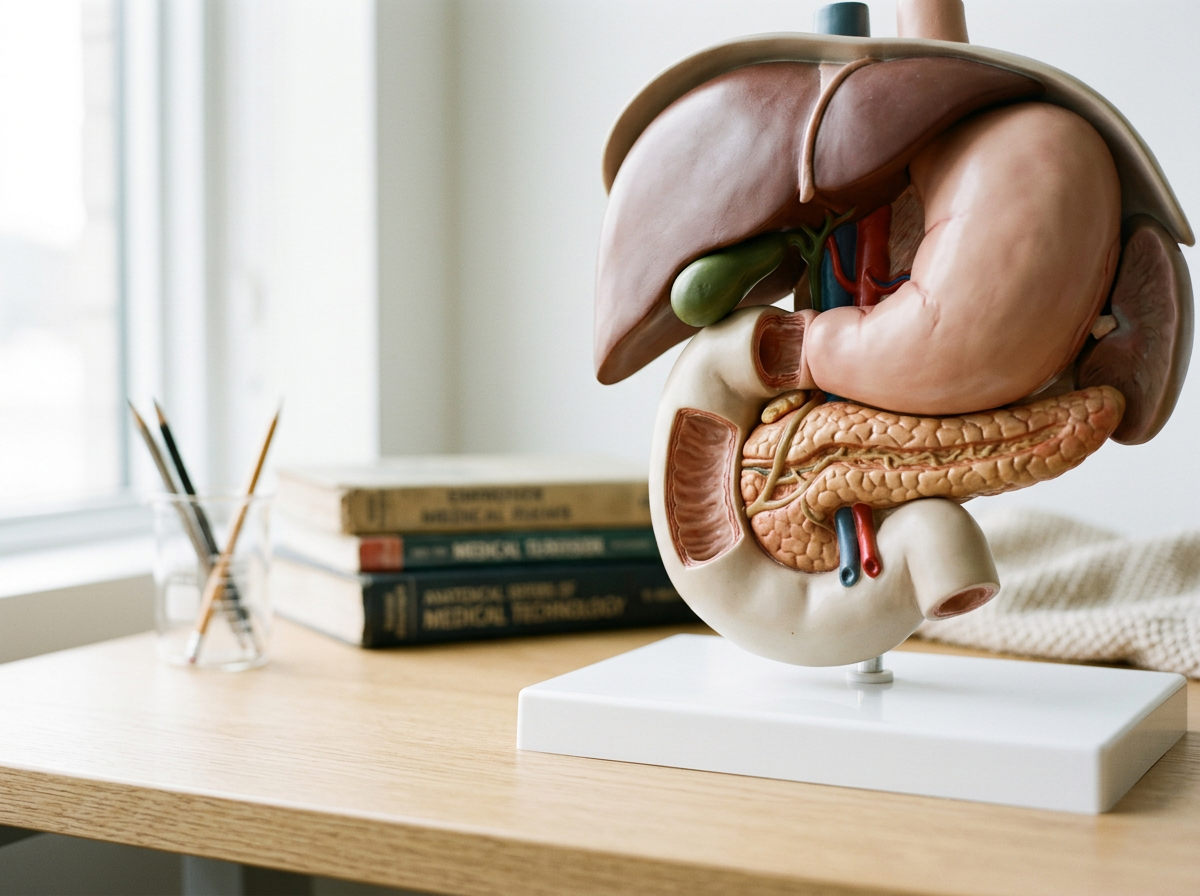
When most people who have T1D or a child diagnosed with it think about the pancreas, they think about insulin. That's understandable because insulin becomes central to daily life after diagnosis. But insulin production is only one of the pancreas's jobs.
The pancreas has two main functions:
It produces digestive enzymes that help break down food and absorb nutrients.
It produces hormones, including insulin, that help regulate blood glucose and other metabolic processes.
The pancreas contains both exocrine tissue, which supports digestion, and endocrine tissue, which produces hormones such as insulin and glucagon. The vast majority of the pancreas is devoted to digestion, while only a small portion is responsible for hormone production. That distinction matters because Type 1 diabetes is often discussed almost entirely through the lens of insulin.
What Type 1 Diabetes Actually Targets
Type 1 diabetes is an autoimmune condition. The immune system mistakenly attacks insulin producing beta cells, which are located within tiny clusters of endocrine tissue called the islets of Langerhans.
As more beta cells are destroyed, the body loses its ability to produce enough insulin to regulate blood glucose levels. Eventually, insulin from an external source becomes essential. What surprised me when I began reading more widely was just how small a proportion of the pancreas is directly involved in insulin production.
Around 95-98% of the pancreas is made up of exocrine tissue, which produces digestive enzymes and bicarbonate to help break down food and absorb nutrients. The remaining 1-2% consists of the endocrine islets of Langerhans, which produce hormones including insulin and glucagon. Even within those islets, beta cells are only one type of hormone producing cell. They are responsible for making insulin and are the primary target of the autoimmune attack in Type 1 diabetes. This doesn't mean we can assume that "98% of the pancreas is unaffected" in someone with Type 1 diabetes.
What it does illustrate is that Type 1 diabetes primarily targets a specific population of cells within a much larger and more complex organ.
That was a distinction I had never heard explained at diagnosis.
So Does the Rest of the Pancreas Keep Working?
For most people, yes. The digestive functions of the pancreas generally continue after a Type 1 diabetes diagnosis. This is why saying that the entire pancreas "stops working" isn't quite accurate. However, the picture may be more complex than many of us were taught.
Over the past two decades, researchers have found evidence that the pancreas in people with Type 1 diabetes is often smaller than that of people without the condition and that some individuals show changes in exocrine pancreatic function. Researchers have also identified exocrine abnormalities, including evidence of pancreatic exocrine insufficiency, in some people with Type 1 diabetes. Importantly, this does not mean everyone with Type 1 diabetes develops digestive symptoms or pancreatic insufficiency.
What it does mean is that scientists are continuing to investigate how Type 1 diabetes affects the pancreas beyond the loss of beta cells alone. For me, this was one of the most interesting discoveries. The condition I'd always understood as a disease of insulin producing cells may involve wider changes within the organ itself, even if researchers are still working to understand exactly what those changes mean.
What About the Honeymoon Phase?
Many families also learn about something called the honeymoon phase. After diagnosis and the start of insulin therapy, some surviving beta cells may continue producing small amounts of insulin for a period of time. This can temporarily reduce insulin requirements and make glucose management appear easier.
The honeymoon phase isn't a cure, and it doesn't mean Type 1 diabetes has gone away. It simply reflects some remaining beta cell function.
“I’m My Child’s Pancreas”
If you're a parent of a child with Type 1 diabetes, you've probably heard this phrase before. I've said it myself. It's usually meant to describe the constant decision making involved in managing diabetes: counting carbohydrates, calculating insulin doses, responding to alarms, monitoring trends, managing illness, communicating with schools and making adjustments day and night.
In that sense, the phrase makes perfect sense. But learning more about pancreatic function has made me think about it slightly differently. Parents aren't replacing an entire pancreas. We're helping manage one of its most important functions: insulin delivery. That may sound like a small distinction, but I think it's an important one.
A healthy pancreas responds automatically to countless signals every minute of every day. No parent, insulin pump or automated system can reproduce that perfectly. Understanding this helped me reframe my expectations. Managing Type 1 diabetes isn't about becoming a perfect substitute for a biological organ. It's about making the best decisions we can with the information, tools and support available.
Why This Matters
Learning this didn't change my child's treatment. They still need insulin. We still count carbohydrates, monitor glucose levels and navigate all the daily realities of Type 1 diabetes.
What changed was my understanding of the condition itself.
For years, I thought about Type 1 diabetes simply as a pancreas that no longer worked. What I've come to understand is that the reality is both simpler and more complex than that. Type 1 Diabetes primarily destroys the insulin producing beta cells that allow the body to regulate blood glucose, but those cells exist within a much larger organ that also play an important role with multiple functions. At the same time, research suggests the wider pancreas may also be affected in ways we are still working to understand.
The practical implications of Type 1 Diabetes remain exactly the same. Insulin is still essential. Daily management is still demanding. None of that changes.
What changes is perspective.
Understanding that the pancreas is more than an insulin producing organ helped me move beyond a simplified explanation and develop a fuller picture of what Type 1 Diabetes actually is.
It’s a small distinction, but one I wish someone had explained to me earlier.
You Are Not Your Child's Pancreas
If there’s one thing I’ve taken away from learning more about this, it’s that parents or anyone with T1D are often carrying a burden they were never meant to carry alone. When we say, “I’m my child’s pancreas,” we’re usually trying to describe the constant decision making, vigilance and responsibility that comes with managing the condition. But no parent can truly replace a pancreas.
No parents can respond instantly to thousands of physiological signals every day. No insulin pump, algorithm or automated system can fully replicate what a healthy pancreas does without conscious effort. And that’s important to remember.
Diabetes management is not a test of whether we become a perfect substitute for a biological organ. It’s not about perfection. It’s about showing up, learning, adapting, making the best decisions we can with the information available and helping our children live full, confident lives despite the challenges that Type 1 Diabetes brings.
So perhaps the phrase needs a small adjustment. We are not our children’t pancreas. We are their parents/ caregivers. We are the people who sit beside hospital beds at diagnosis, learn a new language of carbohydrates and correction factors, wake up to alarms in the middle of the night, advocate when other’s don’t understand and slowly help our children build the knowledge and confidence to manage their diabetes for themselves.
That’s a role no organ could every perform.
Sources and Further Reading
If you'd like to explore the science behind this topic, these are some of the resources I found most helpful.
Understanding the pancreas
Physiology, Pancreas (StatPearls / NCBI Bookshelf)
Anatomy of the Pancreas (StatPearls / NCBI Bookshelf)
Understanding pancreatic hormone-producing cells
Pancreatic Islet Cell Hormones: Secretion, Function, and Diabetes Therapy
Research into wider pancreatic changes in Type 1 diabetes
Exocrine Pancreas Dysfunction in Type 1 Diabetes (Endocrine Practice, 2020)
Structure and Function of the Exocrine Pancreas in Patients with Type 1 Diabetes
Impaired Exocrine Pancreatic Function in Different Stages of Type 1 Diabetes
Please note: This article reflects my perspective as both a parent of a child with Type 1 diabetes and someone with a professional interest in health and research. It is intended to encourage understanding and informed discussion, not to replace advice from your diabetes team or healthcare professionals.
